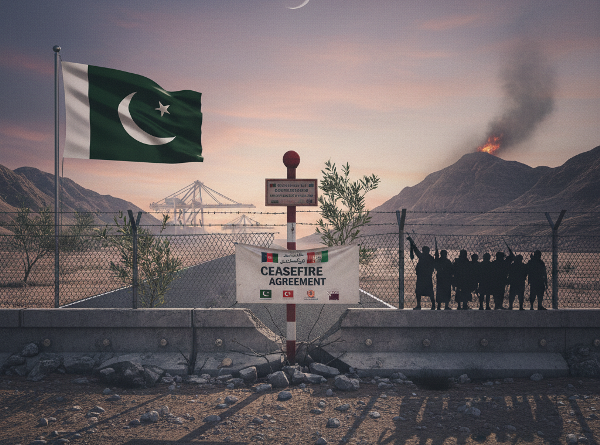
Pakistan Says Ceasefire Depends on Taliban Stopping Border Attacks — Tensions Escalate Along the Durand Line
Pakistan has issued a clear message: a ceasefire with Afghanistan is impossible unless the Taliban stop cross-border attacks immediately.
This warning comes as deadly incidents continue along the Durand Line, pushing the region into a volatile new phase.
As security forces face escalating threats, Pakistan insists that the burden now lies squarely on the Taliban administration to restore stability.
Why Pakistan Is Drawing a Hard Line
Border attacks have intensified in recent weeks, straining already-fragile relations between Islamabad and Kabul. Pakistan’s security leadership argues that militant groups are using Afghan territory to stage raids — a claim the Taliban continues to deny.
To understand broader tensions in the region, also see
Key Reasons Behind Pakistan’s Tougher Stance
- Militants targeting Pakistani security posts
- Increase in cross-border infiltration
- Failure of previous coordination mechanisms
- Public pressure to secure the frontier
- Rising political sensitivity around national security
Taliban’s Response So Far
The Taliban administration insists it is committed to preventing attacks from its side. However, Pakistan argues that words alone are not enough — and only demonstrated control over militant groups will open the door to meaningful dialogue.
Border Violence Deepens Regional Instability
The violence is part of a broader pattern affecting several conflict-prone areas. Other regions face similar fragile ceasefire conditions, as highlighted here
Immediate Consequences of Ongoing Attacks
| Impact Area | What’s Happening |
|---|---|
| Security | Border troops on high alert |
| Diplomacy | Ceasefire talks stalled |
| Trade Routes | Transport disruptions increasing |
| Public Sentiment | Rising demand for tougher action |
What Pakistan Wants Before Talks Resume
Pakistan has outlined several conditions that must be met before ceasefire discussions can move forward.
Minimum Requirements
- Taliban must prevent cross-border firing
- Militant safe havens must be dismantled
- A joint border-monitoring system must be implemented
- Clear communication channels must be restored
How This Impacts the Region
The stability of Pakistan-Afghanistan relations is vital for broader regional peace efforts. A snapshot of regional cooperation efforts can be seen here
If tensions continue unchecked, the impact could spread beyond the frontier, affecting migration, trade, and counter-terrorism operations.
FAQs
1. Why is Pakistan linking a ceasefire to Taliban actions?
Because attacks originating from Afghan territory have increased sharply, threatening national security.
2. What conditions must be met for talks to continue?
Pakistan wants an immediate halt to cross-border attacks and proof of Taliban enforcement on militants.
3. How serious are border clashes right now?
Clashes have become frequent, prompting troop mobilization and diplomatic warnings.
4. What is the biggest obstacle to peace?
The inability to control armed groups operating along the Afghan side of the border.
5. What happens if violence continues?
Diplomatic relations may deteriorate further, and border security operations could intensify.
Final Editor’s Verdict
This ceasefire standoff represents one of the most critical moments in Pakistan-Afghanistan relations in recent years. Pakistan’s position is firm: peace cannot be negotiated under fire. Whether the Taliban can — or will — control border militants will determine if dialogue resumes or tensions escalate further.
The coming weeks will decide whether the region moves toward stability or deeper instability.
Source: https://www.dawn.com/news/1950173
Tags: Pakistan, Afghanistan, Khawaja Asif, Taliban, TTP, Ceasefire Agreement, Qatar Mediation, Turkey Diplomacy