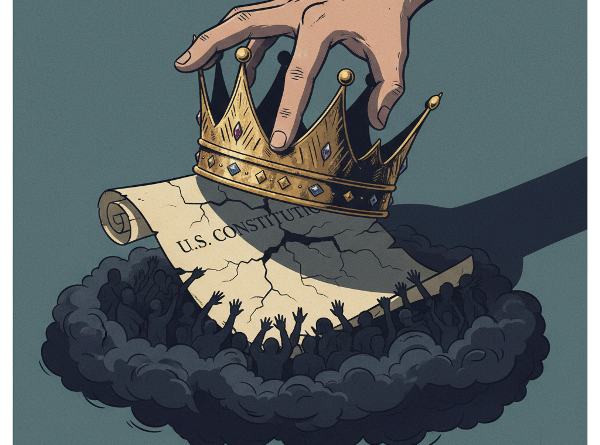
‘No Kings’ Movement Ignites National Debate Over Presidential Power in the U.S.
A wave of “No Kings” protests has swept across the United States, sparking one of the biggest public conversations in years about the limits of presidential power and the strength of America’s democratic institutions. Millions gathered in cities nationwide, raising alarms about what they view as an escalating pattern of executive overreach under President Trump.
A Viral Flashpoint: AI Memes Trigger National Outcry
The protests surged after President Trump and Vice President JD Vance shared a series of AI-generated memes on social media. One depicted Trump as “KING TRUMP” soaring over crowds in a fighter jet, while another showed Democratic leaders kneeling before him.
Supporters brushed the posts off as satire. But critics — including many moderates — argued that the memes trivialized widespread concerns about autocratic behavior and reinforced perceptions of a presidency drifting beyond democratic norms.
The imagery struck a nerve across the political spectrum, becoming a catalyst for nationwide mobilization.
Controversial Decisions Fuel Concerns About Executive Overreach
Beyond social media, several recent decisions by the administration intensified public unease about the boundaries of presidential authority.
- Commutation of George Santos
President Trump’s decision to commute the sentence of former Rep. George Santos, convicted of fraud-related charges, renewed debate over whether clemency powers were being used to benefit political allies. While constitutionally permitted, the move revived longstanding concerns about impartiality in the justice system. - Calls for Charges Against Political Opponents
Previous public pressure on prosecutors to pursue political rivals added to the perception that legal processes were becoming entangled with presidential influence.
These actions, critics argue, paint a picture of a presidency increasingly willing to blur the lines between constitutional authority and personal loyalty.
Foreign Policy Actions Raise Legal and Ethical Questions
International decisions added fresh fuel to the controversy.
Defense Secretary Pete Hegseth authorized military strikes in the Caribbean and Venezuela against groups labeled as narcotics traffickers — without congressional approval.
Legal scholars and foreign policy analysts have questioned whether the administration effectively bypassed constitutional requirements for military engagement, raising fears of an “imperial presidency” with minimal oversight.
Simultaneously, covert CIA operations and direct warnings to foreign leaders intensified scrutiny over whether U.S. policy-making was drifting toward unilateral executive action. Journalists were also barred from Pentagon briefings, further heightening transparency concerns.
Massive Nationwide Protests Signal Broad Public Engagement
Organizers of the “No Kings” movement reported participation in the millions, with thousands of coordinated events across the country. Attendees included Republicans, Democrats, independents, libertarians, and first-time protesters — a sign of increasingly bipartisan unease.
Participants emphasized that their goal was not political retaliation but protecting democratic norms, the rule of law, and constitutional balance. Many described the moment as a “turning point” for civic participation.
The White House dismissed the protests as “ineffective” and “out of touch,” but the scale of the mobilization suggests deeper national concerns that will likely influence the political climate moving forward.
A Nation Debates Its Future
The “No Kings” movement has illuminated a sharp divide in the country’s understanding of presidential power. For some, strong executive action symbolizes effective leadership. For others, recent events reflect a dangerous erosion of democratic checks and balances.
As both sides continue to mobilize, the debate over presidential authority — and how far it should reach — appears destined to shape America’s political landscape well into 2026 and beyond.
🧾 Final Editor’s Verdict
This story reflects a pivotal moment in modern U.S. politics. The scale of the protests, the intensity of public concern, and the controversy surrounding executive actions point to a growing national conversation about constitutional limits and the direction of American democracy.
The “No Kings” movement has become more than a protest — it’s a defining debate over the future of presidential power in the United States.
Source: https://edition.cnn.com/2025/10/20/politics/trump-no-kings-protests-vance-cia-analysis