West Bank Annexation Bill Draws US Criticism, Stirs Israeli Politics
Summary:
A recent preliminary vote in Israel’s parliament, the Knesset, to apply Israeli law in the occupied West Bank has sparked significant international concern and internal political friction. This symbolic step, driven by far-right politicians, has drawn sharp criticism from key US figures, including Vice-President JD Vance and Secretary of State Marco Rubio, who both branded the move as a “stupid political stunt” and a threat to President Donald Trump’s ongoing peace efforts in the region.
The proposed bill aims to formalize Israel’s control over territory that Palestinians envision as part of their future independent state. Despite the initial approval, the bill faces an uncertain path, as Prime Minister Benjamin Netanyahu’s office quickly distanced itself from the vote, emphasizing that his Likud party and its ultra-Orthodox coalition partners largely did not support it. Netanyahu himself labeled the move a “deliberate political provocation by the opposition to sow discord.” This highlights the deep divisions within Israeli politics regarding the West Bank annexation.
The US administration has consistently maintained its opposition to any unilateral annexation of the West Bank. Both Vance and Trump have reiterated that such a move would jeopardize US support for Israel and undermine relationships with Arab countries that have recently forged ties with Israel. Trump, in an interview, stated that “Israel would lose all of its support from the United States if that happened.”
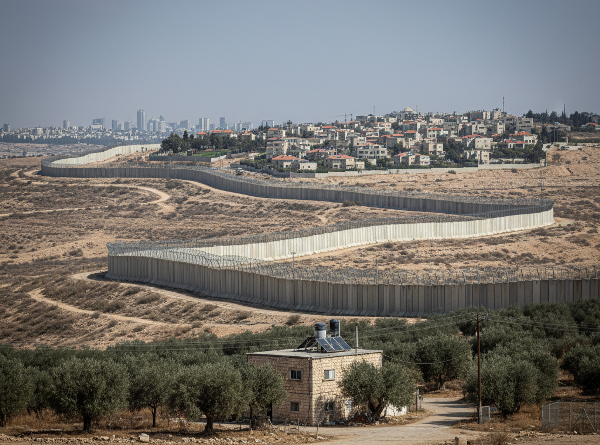
Historically, Israel has constructed approximately 160 settlements in the occupied West Bank and East Jerusalem since the 1967 Middle East war, housing around 700,000 Jewish settlers alongside an estimated 3.3 million Palestinians. These settlements are considered illegal under international law. While Prime Minister Netanyahu has previously expressed support for annexing West Bank land, he has refrained from advancing such plans due to the significant risk of alienating the United States and other Arab nations.
The bill’s future remains uncertain. It passed by a narrow margin and now proceeds to the Knesset Foreign Affairs and Defence Committee, requiring three more readings to become law. The Palestinian foreign ministry has condemned the Knesset’s action, reaffirming that Israel holds no sovereignty over Palestinian land. US officials, including Rubio, continue to emphasize that annexation would be “counterproductive” to the current Gaza peace plan, which is in its initial phases, focusing on a ceasefire and humanitarian aid. The US remains committed to advancing the second phase of its peace plan, which includes establishing an interim government in Gaza and disarming Hamas, in the wake of the October 7, 2023, conflict.